It’s not easy writing about real estate values in New York City. In fact, I hadn’t posted anything since September 2017. Now actually, I’ve been pretty busy with some large time-consuming projects. But I can’t put it all on that. Had I seen something I felt compelled to say on the topic, I’d have found some time to write. What’s a real estate investor to do?
The Short Answer: Sell Easily, Buy Carefully
I’d hate to just sit back and yell “sell, sell, sell!” Sure I’d be more likely than not to look good five years from now. But then, a broken clock (at least an analog clock) is correct twice a day. So it seems appropriate to be a bit more nuanced than Chicken Little (“The sky is falling, the sky is falling,”).
For nuance, I’ll turn to my Wall Street background. Talking about value is OK, but not if you mean to equate values with prices, and that’s a mistake many make. Price is based on two things. Nobel laureate Dr. Robert Shiller broke prices into two components; the portion that reflects the activities of “smart money” and the portion that reflects the activities of “ordinary investors,” Stanford’s Dr. Charles Lee substituted a different set of labels, “value” and “noise.” For the latter, the grand equation is P = V + N (price = value + noise). 
I, practical numbers geek that I am (as opposed to theoretical numbers geek) rephrased it in a way that lends itself to specific computation; “standstill value” (or here-and-now value,” versus “value based on future growth expectations.” Although this isn’t the place to lay out the formulas I use, I will say that my labels lend themselves most easily to evaluating real estate prices. I’ll make it even easier by abbreviating to SSV for (standstill value) and FGV (for future growth value). And since I like cool equations, I’ll add one more term; IREP for “Investment Real Estate Prices,” Therefore:
IREP = SSV + FGV
The innovation, starting with Shiller and on down to yours truly is in how we react to Noise or Future Growth Value.
In the stock market, authors and gurus who aim at dummies-level investors suggest that noise is evil, a manifestation of the dark forces of ignorance that must be vanquished by better investor education. That’s nonsense. If every stock was to be truly based on objective correct value, then there would never be any reason for anybody to trade, liquidity would dry up, and the capital markets as we know them would collapse. In fact, even if we could avoid a liquidity collapse, stock prices would still vaporize because without the prospect of something more in the future, stocks would have to all yield more than bonds, which is not even close to reality. The single most fundamental pillar of stock market theory holds that the fair price of a stock is the next expected dividend divided by the difference between the required rate of return the expected rate of dividend growth. Noise is the driver of dividend growth expectations and assessment of risk which influences the required rate of return.
Those who have not understood and rationally accounted for noise are the ones who even now can’t understand why shares of obviously-valuable companies such as Amazon, Google (now called Alphabet due to the efforts of the most imbecilic rebranding since who knows when), Facebook, Tesla, etc. trade above zero. (All or almost all of these stock prices are based on the influence of noise.)
A Fresh Look At Investment Real Estate Prices
I need to refine the sentiments I previously expressed. There may well still be price justification, in some cases a lot of justification, in current real estate prices even in supposedly hot areas like hipster Brookly, Sheepshead Bay, Harlem, Upper Manhattan, the south Bronx, and in my home base, Queens. But it’s very hard nowadays to find situations where the SSV component of price is meaningfully, if at all, above zero. For most Queens properties I’ve looked at lately (2-3 family homes), SSV, by my estimates using conventional real estate metrics such as price-to-rent or the more comprehensive cash-on-cash rate of return is at best trivially above zero and often negative.
So we’re looking at one of two scenarios (and both may occur to varying degrees in different areas and for different property types).
The Bad Scenario
One possibility is falling or possibly crashing prices in the not-too-distant future. Because real estate investing tends to be leveraged (meaning there are mortgages that need to be serviced) and because of mandatory expenses like taxes, repairs and utilities, infinite patience for a better future is available only to those that can afford it. Many recent investment buyers have allowed themselves to be sold on balloons, mortgages that come due and must be refinanced in five years. Those whose cash flows are borderline now could be in big big trouble when those balloons come due if interest rates rise. I can’t swear they will. But since those properties were bought when benchmark rates were near zero, we can be pretty sure they won’t go down, as they steadily had from 1982 through 2014.
There’s also the revenue challenge. My firm is seeing increasing resistance by prospective tenants to rents that would have been snapped up a couple of years ago (I’m not talking about the luxury market, which has its own issues). We’re working harder to find tenants who are even able to pay what owners seek. And we look for real. A lot of agents don’t and rush to fill apartments and get commissions. That (coupled with hissy fits by Landmarks Commissioners) has caused me to dust off my old legal training and resume getting my money’s worth out of the biannual fees I pay to State to keep my law practice credentials current. I’m actually starting to get used to Housing Court which is only a shade more peaceful than Dante’s deepest circle of hell. And, by the way, that is definitely a rough scene for property owners who, even when their cases are strongest, have to be prepared to forfeit four to six months of rent when a tenancy turn bad. That can be rough for a two- or three-family unit.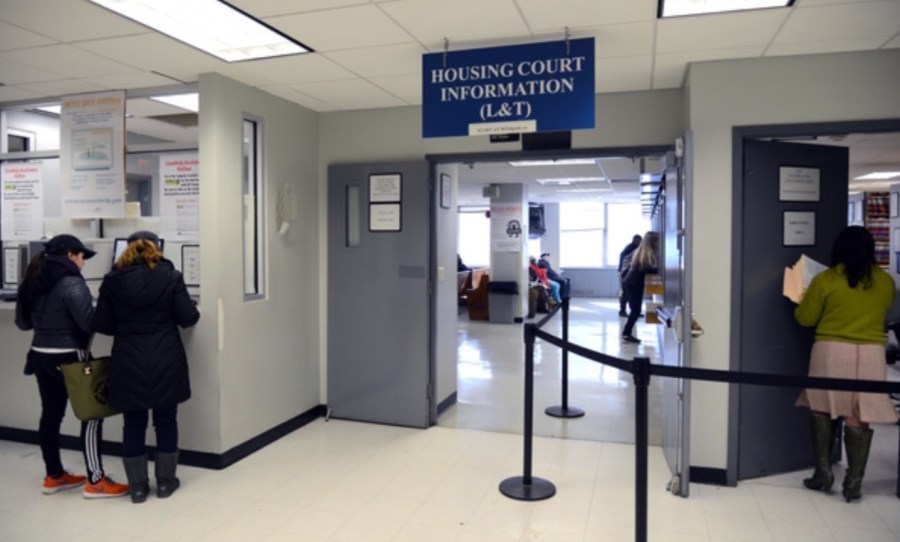
The Good Scenario
This is all about the other component of pricing, FGV or future growth value. Many who buy property in Queens know full well that more than a few of these pre-1930s fleabag houses for which they pay about a million aren’t long for demolition. The geography of large swaths of Queens is fabulous and even commute time to Manhattan may diminish as a drawback assuming work-from-home or local shared spaces gains ground versus concentrated urban cores. Early indications from new development in Sheepshead Bay, a nice area in the deepest part of Brooklyn seem to be bearing this out, as the ravages of commuting via the B and Q trains don’t seem to be cutting into demand. This will be a big part of the investment case for the Bronx, and the willingness of buyers to not worry about the horrors of the 2, 4, 5 and 6 trains.
It’s not hard to envision a time in the not-so-distant future when many of the roach resorts trading off the MLS at or near the million mark cease to exist and wind up being replaced by sparking new buildings, possibly with a bit more density zoning authorities willing.
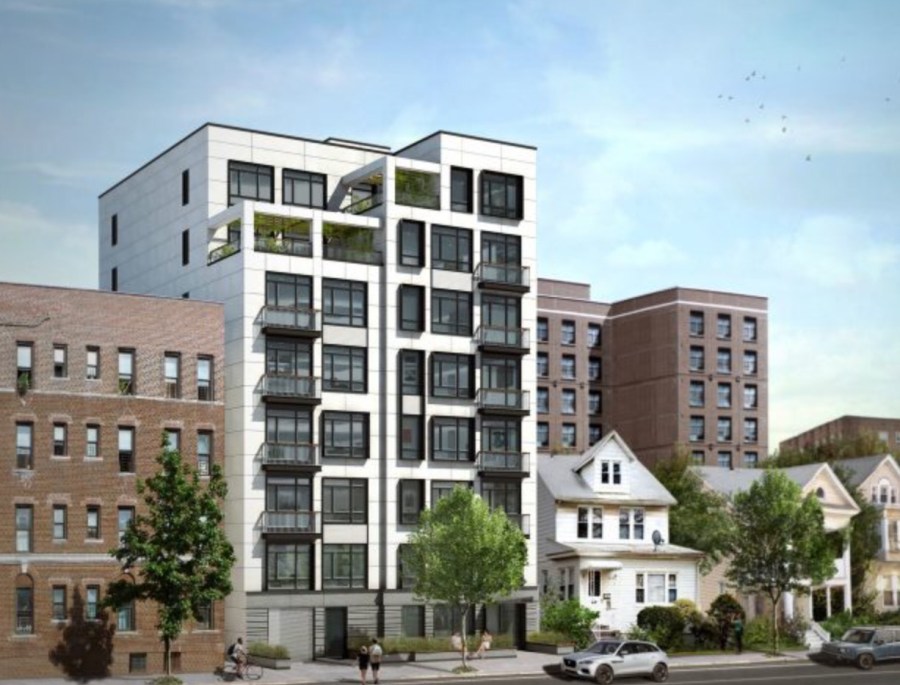
New York City needs new housing stock. We need better quality units. We need more of them. And we need enough of them to cause supply and demand to accomplish what rent regulation has failed to do since it was enacted as a temporary post World War II emergency (boost affordability). So there is a lot of future growth value to be had, even now.
Reconciling the Scenarios
The good scenario is available not only to the extremely patient but also only to those who have backup liquidity to survive the waiting, or the capital to jump into areas where the future is now (few of which have manifested thus far in Queens except for honorary Manhattan (Long Island City and Astoria) and more recently in and around Jamaica.
The rest need to sell easily and buy carefully, and for those who are already invested, manage the living daylights out of here-and-now cash flows

 NYC Real Estate Values