Lowball offers, those that are way below asking price, are obviously tempting: Why not take as big a head start as possible in the negotiating process and wind up with the lowest possible purchase price! But they can also be dangerous in that they arguably set an amateurish tone for the negotiation and could lead to the buyer losing out on an opportunity to get a property he or she really wanted. But now, the market may be at a juncture that warrants reassessment of lowball offers.
Representing Patrick
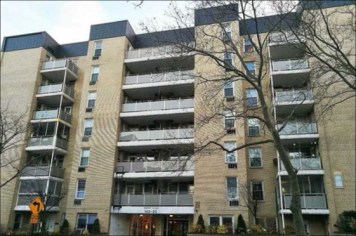
Patrick is not a real name, but is a stand-in for a client who is very real. He is an asset-rich income-constrained single retiree who wants to trade down from a three-bedroom house to a studio co-op and for a variety of reasons, Briarwood Queens seemed a promising place to look. I found a couple that seemed promising and one one to which we got access last weekend appealed to Patrick as a potential living space, although he wavered a bit on the exact location (walking time to the subway). Ultimately, Patrick told me he wanted to make an offer.
Coming Up With A Number
The apartment we would pursue was a reasonably new listing priced at about $115,000. The monthly charge was in the high $300s. His income situation was borderline in terms of what I was told regarding board preferences, but as noted, he had assets, some flexibility to boost income, and ample ability (and intention) to purchase the apartment for cash. The comps, from the Long Island MLS, are shown in Table 1.
Table 1
| Unit # | $ Monthly
Maintenance |
$ Purchase Price | Contract
Date |
|
| Initial | Final | |||
| 1 | 402 | 104,000 | 95,000 | 12/6/13 |
| 2 | 500 | 80,000 | 75,000 | 3/6/14 |
| 3 | 402 | 118,000 | 115,000 | 3/11/14 |
| 4 | 430 | 108,000 | 96,000 | 8/7/14 |
| 5 | 430 | 95,000 | 90,000 | 9/29/14 |
| 6 | 325 | 99,000 | 90,000 | 12/16/14 |
| 7 | 436 | 113,888 | 113,888 | 4/28/15 |
| 8 | 517 | 85,000 | 85,000 | 5/5/15 |
| 9 | 357 | 125,000 | 105,000 | 6/23/15 |
| 10 | 465 | 95,000 | 95,000 | 7/6/15 |
| 11 | 455 | 105,000 | 95,000 | 7/21/25 |
| 12 | 468 | 125,000 | 125,000 | 7/23/15 |
| 13 | 391 | 112,000 | 104,000 | 7/27/15 |
| 14 | 496 | 125,000 | 115,000 | 10/6/15 |
| 15 | 424 | 126,999 | 121,500 | 10/23/15 |
| 16 | 428 | 119,000 | 105,000 | 10/26/15 |
| 17 | 534 | 107,000 | 105,000 | 1/22/16 |
| 18 | 456 | 118,888 | 115,000 | 7/28/16 |
| 19 | 409 | 122,888 | 120,000 | 8/23/16 |
The approximately $115,000 asking price seems well within reason given recent sales in the neighborhood. Nevertheless, Patrick would have none of that. He insisted we offer $90,000 and if the seller didn’t accept, so be it. He doesn’t have to move now at all if he doesn’t wish, so he was willing to lose that apartment. My gut reaction was to cringe. But on further reflection, I not only submitted the offer but turned on my old-time lawyer persuasiveness and made a diligent argument in support of the $90,000 number.
 Obviously, Patrick’s willingness to walk away was a big factor. Had he been truly determined to buy, it would likely have been a different story. But aside from the client’s degree of urgency, or rather lack thereof, I found some logic upon which I could hang my hat.
Table 2, shows the same set of comps but I supplemented the data with one additional item, the 10-year U.S. Treasury Note interest rate. This isn’t the same as the prevailing mortgage rate. But it is an important benchmark against which mortgage rates are set.
Table 2
| Unit # | $ Final
Price |
Contract
Date |
% Interest
Rate * |
| 1 | 95,000 | 12/6/13 | 2.88 |
| 2 | 75,000 | 3/6/14 | 2.74 |
| 3 | 115,000 | 3/11/14 | 2.77 |
| 4 | 96,000 | 8/7/14 | 2.43 |
| 5 | 90,000 | 9/29/14 | 2.50 |
| 6 | 90,000 | 12/16/14 | 2.07 |
| 7 | 113,888 | 4/28/15 | 2.00 |
| 8 | 85,000 | 5/5/15 | 2.14 |
| 9 | 105,000 | 6/23/15 | 2.42 |
| 10 | 95,000 | 7/6/15 | 2.30 |
| 11 | 95,000 | 7/21/25 | 2.35 |
| 12 | 125,000 | 7/23/15 | 2.38 |
| 13 | 104,000 | 7/27/15 | 2.23 |
| 14 | 115,000 | 10/6/15 | 2.05 |
| 15 | 121,500 | 10/23/15 | 2.09 |
| 16 | 105,000 | 10/26/15 | 2.07 |
| 17 | 105,000 | 1/22/16 | 2.07 |
| 18 | 115,000 | 7/28/16 | 1.52 |
| 19 | 120,000 | 8/23/16 | 1.55 |
*10-Year Constant-maturity Treasury rate as per Federal Reserve Economic Data
Where Comps Are vs. Where They Are Likely to Go
Obviously, there are many things that influence property prices but it cannot be doubted that mortgage interest rates are a huge item given their direct impact on the buyer’s monthly cash costs. Table 2 shows that while there is not a perfect correspondence between declines in interest rates and the comp prices, there is a very conspicuous association. We also see that the higher comps, those that give Patrick’s offer lowball status, are associated with a noteworthy drop in the 10-year Treasury rate and, of course, a corresponding drop in mortgage rates.But what about the extent of the decline: 2.14, 2.42, 2.30 down to 1.52 or 1.55. How big a deal is that? It’s less than a full percentage point.
Actually, it’s a lot. Consider Figure 1 below, which charts recent trends in the 10-year rate.
Figure 1

More telling is the longer-term view, which is depicted in Figure 2.
Figure 2
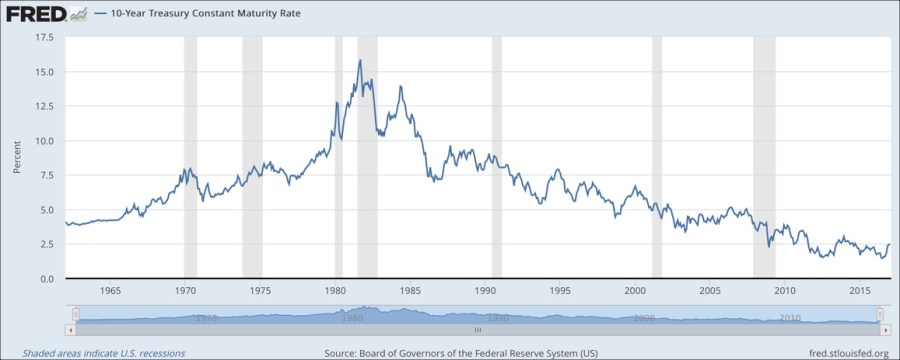
If it can be argued that interest rates in general might soon retreat to 2013-14 levels or beyond, then Patrick’s $90,000 offer, while still strictly speaking a lowball offer, is considerably more defensible.
In a big-picture sense, we’re very close to the 2013-14 interest-rate levels. In fact, differences between then and now are difficult to visually discern on Figure 2.
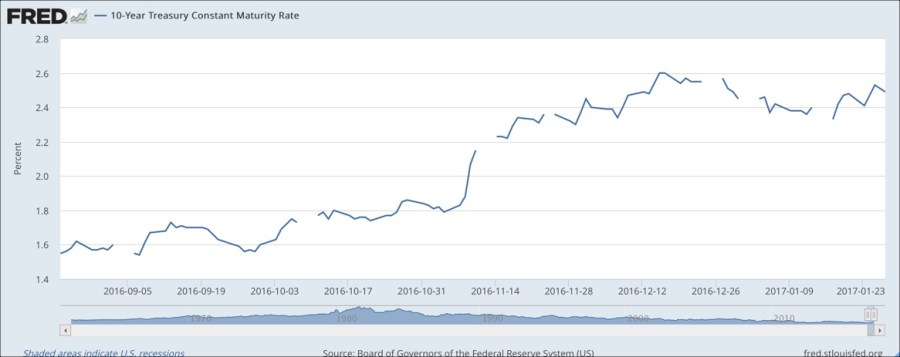
While we know for sure interest rates have stopped falling, we cannot be sure interest rates will rise. They may move sideways for a while and continue to support the sorts of 2015-16 prices we saw in Tables 1 and 2. Seriously, though, how often does anything ever stay the same? Can’t it be argued that the only thing that’s constant is change? Figure 3, which provides a close-up of the most recent interest-rate movements, provides a clue.
Figure 3
Post Script
Patrick changed his mind with regard to neighborhood asked me to withdraw the offer before the seller had an opportunity to respond, and we’re focusing elsewhere. Realistically, though, I did not expect the offer to be accepted, or even met with a counter Patrick might be willing to accept. Patrick understood that and is prepared to stay put for a while. That’s important. As a buyer who is not compelled to act now, he can afford to, in effect, refuse to buy at prices set by what may, in retrospect, turn out to be the last gasp (buying panic) of an overheated market. He can wait for the market to come to him.
This does, however, spotlight the need for sellers to think carefully about how hard they negotiate and whether and how long they think the market will continue to run. In some areas, there may still be a lot of upside; gentrification or other kinds of population inflow or changes in ambiance or quality of life can overpower movement in interest rates. Buyers should, however, at least be considering such issues and not counting on the market to continue to rise simply because it has.

 NYC Real Estate Values