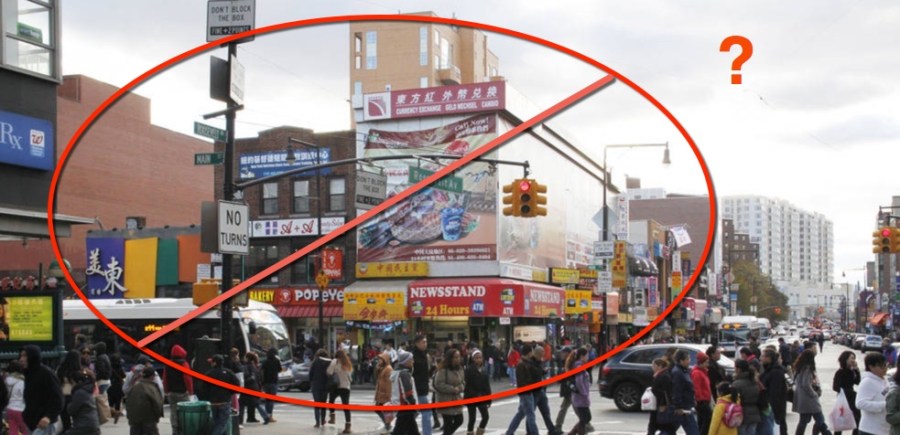
It’s no secret that prices of real estate in Flushing Queens have been sizzling. To get an idea of how hot it’s been, consider that 2- to 5-family homes on the market are now being priced, on average, at 26.2 times annual rentals and, are you ready for this, a pro forma cash-on-cash return of 0.3% assuming down payments of 50%. Buyers who want more leverage would often need to accept negative cash-on-cash returns. A case could be made for that if the buyer legitimately forecasts significant future increases in rental income or decreases in expense. The former is debatable property by property, but on the expense side, it’s pretty clear buyers are not going to get opportunities to refinance at lower rates for a very long time, if at all within the span of their professional lives.
Also well-known is the strong presence of Chinese immigrants and enthusiastic demand from this group for investment properties in New York City, in Flushing and other nearby neighborhoods (some of which are also richly valued). The grapevine in these areas has consistently buzzed about investors eager to take cash out of China and park it in the U.S., particularly in property.
The Currency Play
To a U.S. investor, prospects for a zero or negative return are madness (aside from what they get nowadays from banks and short-term treasuries, but at least there, principal maturity value is not at risk (and they don’t have to manage holdings). But things aren’t so simple when money crosses borders. The exchange-rate play is alive and well and it often happens that prospects for shifting exchange rates would justify a near-zero return. It’s not just about the investment, but also about the “spread” between currency values.
There’s nothing at all unusual about this sort of thing. Multinational companies hedge currencies all the time and investors do likewise. There are even ETFs out there that exist solely for the purpose of letting individuals profit (they hope) from currency movements without going through the hassles and margining typical of the futures markets. In the hedge fund world, the so-called carry trade is old news. So in this bigger context, the activities of Chinese investors in U.S. real estate can be seen as having been quite understandable.
Uh Oh!
Far be it for me to pontificate on legal and regulatory compliance, ethics, etc. regarding China. It turns out though that there is an established regulation there (or law) that barred individuals from moving more than 50,000 Yuan annually out of the country. (Cough, cough . . .) Going forward, all cash transactions (domestic or global) at or above that threshold will have to be reported by financial institutions; the previous reporting threshold was 200,000 Yuan. Overseas transfers of $10,000 or more by individuals will also have to be reported. And, Chinese nationals are permitted to hold only up to $50,000 of foreign exchange an annually.
Reuters reported a government claim to the effect that these controls “are meant to target money laundering, terrorism financing and fake outbound investment transactions, and not normal legitimate business activities.” The holding of foreign exchange is supposed to related to “tourism, schooling, business travel and medical care” and may not include the purchase of overseas property.
What’s Ahead?
 Chinese bankers and regulators are parsing language such as to avoid the appearance of outright currency restrictions and in favor of a view that suggests refinement of established rules. Again, I’m not a regulatory compliance expert on China, but it does seem hard to reconcile the letter and spirit of the law (as it was, as it should have been, as it is, or as it will likely be) with ad hoc observation of aggressively-spending Chinese nationals investing in local real estate markets.
It’s hard to imagine a scenario in which money that’s now here will have to go back. But it’s easy to see a dry-up in a source of funds that had been a powerful driver of property valuations in portions of New York City and elsewhere in the U.S. Sellers in potentially impacted areas of Queens should consider driving softer bargains as buyers look to toughen up in negotiating.

 NYC Real Estate Values
2 thoughts on “China Versus Real Estate Investors”